 by
by The Discovery Illustrated Family Bible is, to be precise, a collection of retellings of episodes to be found in the Bible. The storyteller is Christian Maclean, Editor at Floris Books, an Edinburgh publishing house. The stories are illustrated by the artist and teacher David Newbatt.
The selected stories give a sense of the Bible, sweeping chronologically through history. The book also includes highlights from the non-canonical (to us as Presbyterians) books of the Maccabees and Tobit. That is a fascinating addition in terms of setting in time and place. Christian Maclean’s style is very readable, and great for sharing. For anyone like me used to reading the Bible, the phrasing he employs will sound familiar as though modern translations were bubbling just under his text.
It’s always interesting to me to see which episodes are included in this kind of book. Here, more space is given to the Old Testament, perhaps not surprising given that it’s longer by far than its New companion, and full of easily managed stories. So you’ll find creation, the great male protagonists (patriarchs, prophets and kings) and, I am personally delighted to say, Esther, that so often ignored Biblical book and character. The New Testament selections focus predominantly on the gospels and Jesus’ life on earth. The remaining chapters deal with the beginnings of the Church, Paul, and John’s revelation.
Something I particularly like is the additional information included in the stories. Sometimes it’s descriptive, explaining a little more about the Philistines for example. And sometimes it’s extra detail that doesn’t appear in the Bible but is historical knowledge or unverified generally held belief. In the latter instances the author is explicitly clear that the information in question is not found in scripture. I appreciate both this clarity and the additional information.
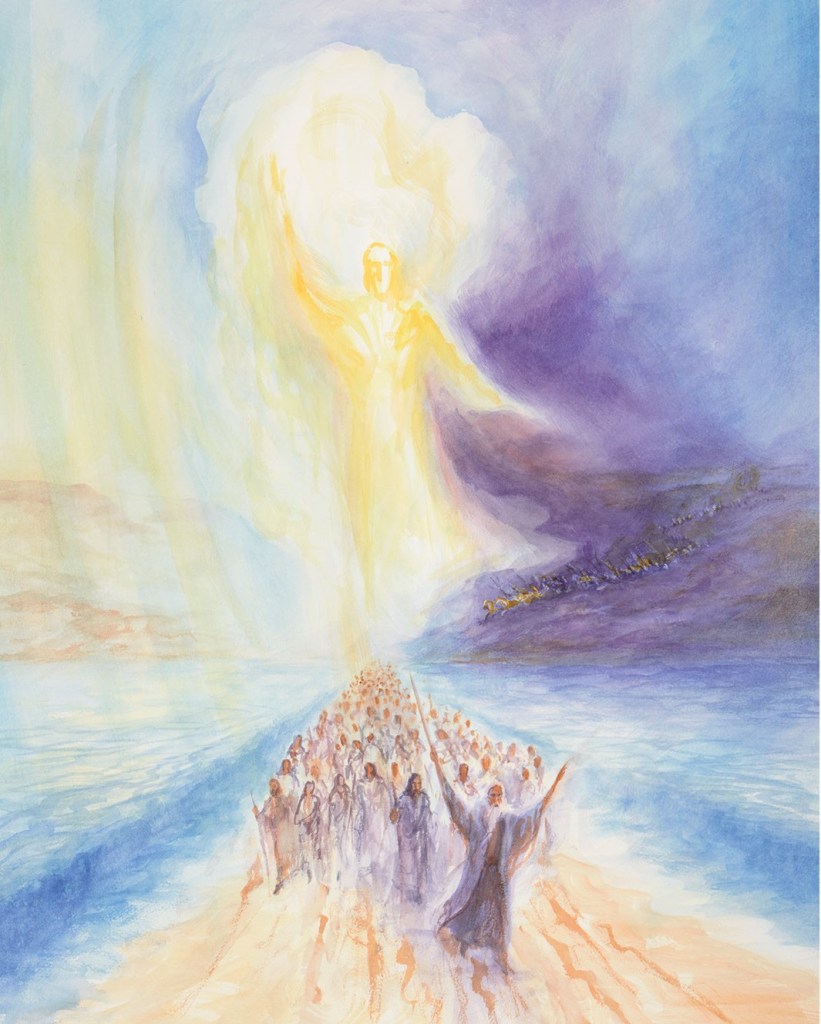
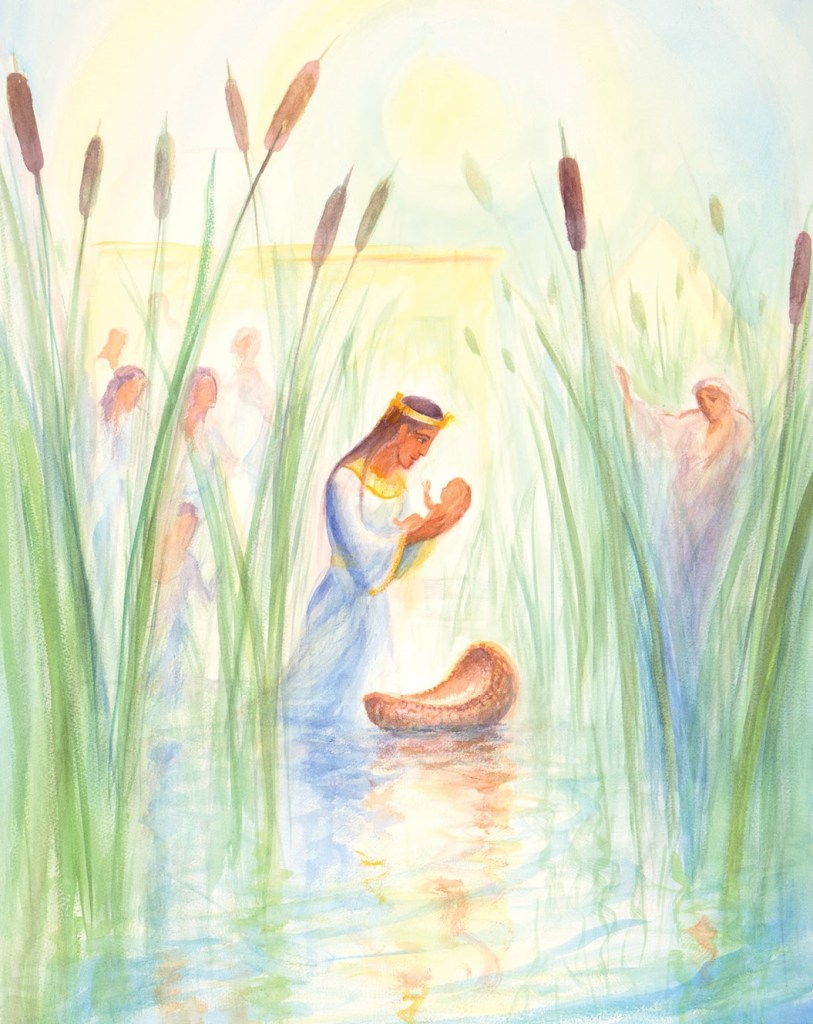
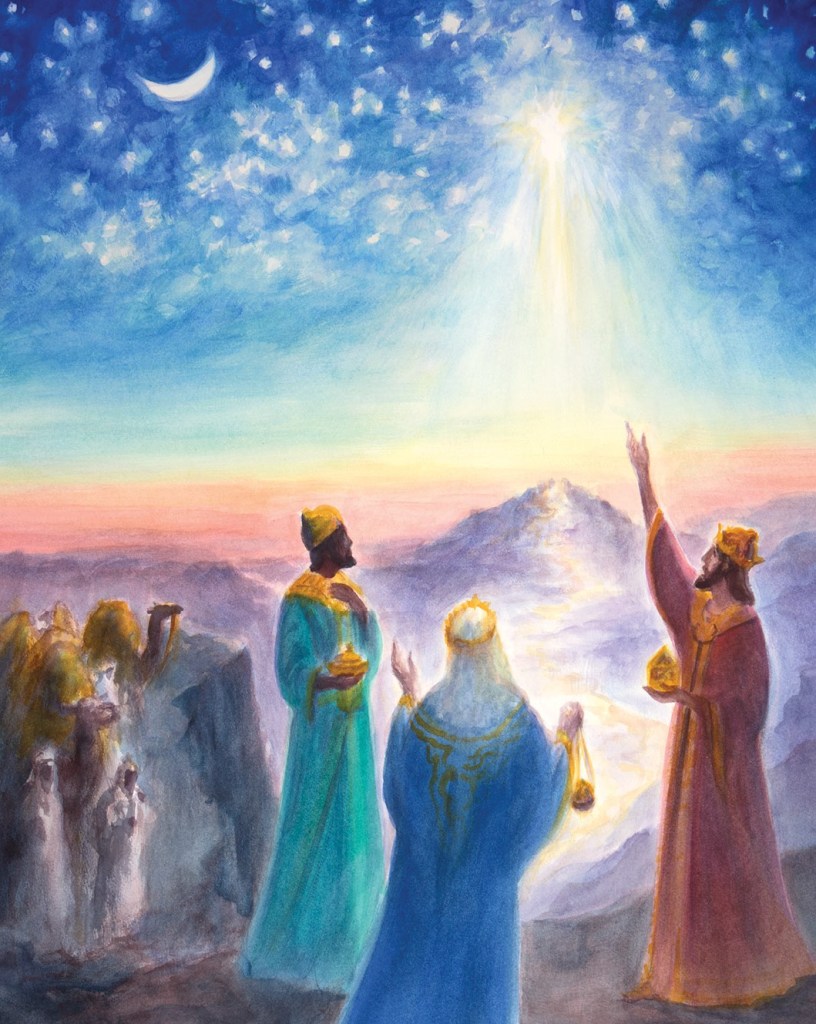
Interspersed throughout the text are beautiful illustrations painted by David Newbatt. They are vivid and dynamic, in soft, muted tones. There is a remarkable amount to be found in even the seemingly simplest of them, sometimes extra detail to the story, sometimes a more emotional feeling. They are all full of expression and help this reader at least to see beneath the surface words, complementing the text well.
The book concludes with some helpful appendices: maps, a glossary, a timeline and, importantly, references showing where each of the retellings can be found in the Bible. As a child, I’d have gone to the maps first. Actually, I still did that! For me, and I am sure for many others, studying a map helps to fix Bible stories in a real time and place and grounds them in history. The other appendices are also very helpful.
All in all this is an excellent sharing of some of the stories and events of the Bible. It gives these episodes an immediacy that is sometimes difficult to find in a strict translation, particularly for those who aren’t as familiar with the Bible.
 Pictures and Conversations
Leave a comment