 by
by At this time of year the book world is full of reading challenges for December. A number have come my way, and I’ve decided to adapt one of them. It came to me from Boldwood Books whose output I review from time to time. I’m not going to be reading a book every day, though; rather I’ll blog about a book which meets that day’s criteria. I can’t promise that all the books I choose will be new to this blog, but I do promise to include some making their debuts here. Here’s what you can look forward to:

But, before that fun commences, let me wish you a very happy St Andrew’s Day. In honour of the day I have perused my bookshelves, physical and virtual, and my reading journal to find a book with Scottish connections to share with you. I was looking for something to whole-heartedly recommend so I’ve had to side-step Lydia Travers’ Murder in the Scottish Hills, the last Scottish-set book I read. It’s the second in a series of what I hate to call cosy crime books, set in 1911. The books are actually quite fun, but this one irritated me so much that I had to pause in my reading of it. Why? Well, remember that it’s set in 1911. The heroine Maud is on holiday in Aberdeenshire but has to return briefly to Edinburgh. She takes the train south, but decides to drive back, and is grateful for the bridge across the Forth which cuts a significant amount of time from her journey. Ms Travers has obviously done some research but not paid enough attention. All the details she gives relate to the Forth Bridge which is of course a rail bridge. The Forth Road Bridge, which would have been of use to Maud, didn’t open until 1964. Aaaarrghhh!
Now I’m all annoyed again. However, on further investigation in my reading journal, I discovered that the next most recent Scottish-connected book I read was Business As Usual by Jane Oliver and Ann Stafford. I re-read it in May this year and was delighted by it all over again. It’s an epistolary novel, a form I always say I don’t like – until I remember all the exceptions! This is most certainly one. It was published in 1933, but I read the 2020 reprint brought to us by Handheld Press. The letters in question are written by Hilary Fane, a delightfully middle class Edinburgh girl. She’s engaged but her wedding isn’t going to take place for a year and so she decides to support herself rather than be a drain on her parents. To that end she takes herself off to London to look for a job.
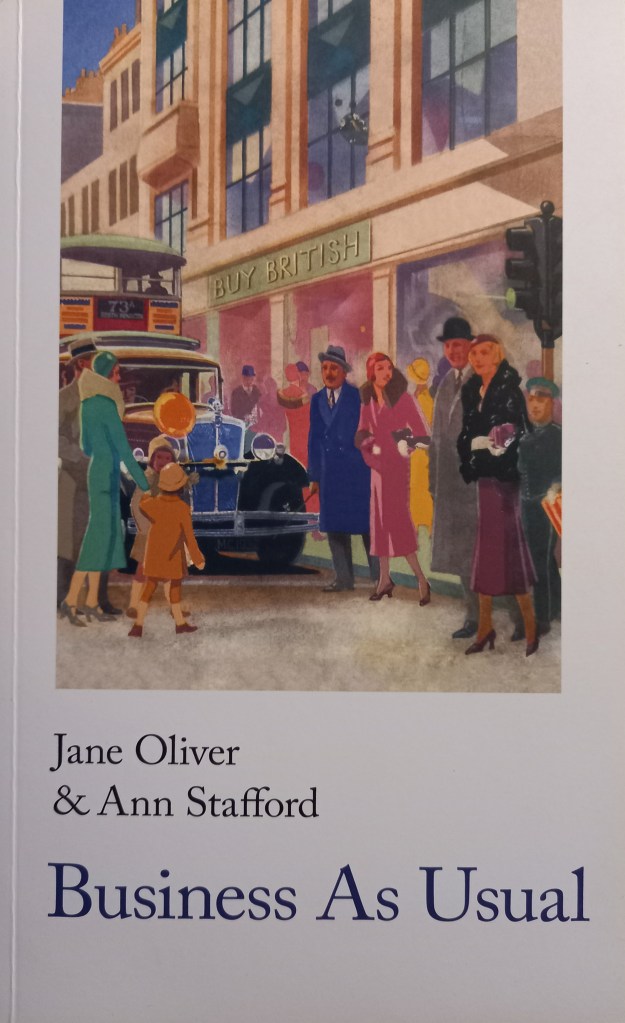
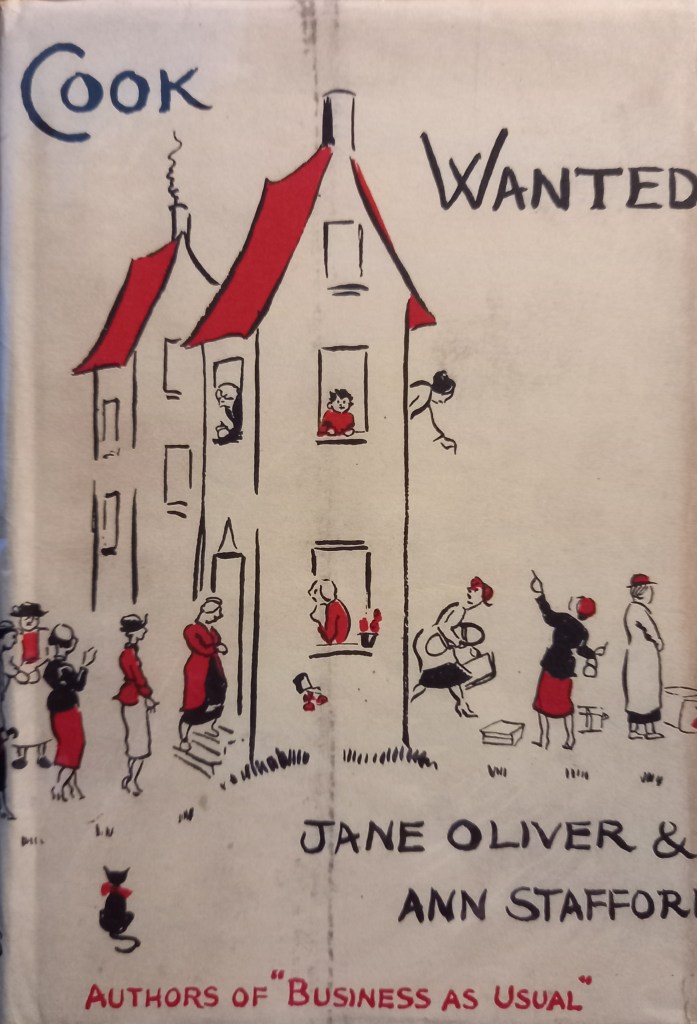
Even with her university degree, though, it turns out be trickier than she thought to find work. But eventually she lands a job in the offices of Everyman’s, a London department store. (You might think it very similar to Selfridges. I couldn’t possibly comment.) She’s not particularly suited to the work or her position but she’s gritty, and she perseveres. Fairly quickly (helped inevitably by the British class system) she gains promotion, but she still doesn’t have her troubles to seek. Her letters are frequently wry and self-deprecating and are very funny. By the end of the book, I felt as though Hilary was a new friend, and I was delighted to find a copy of the sequel, Cook Wanted. And I have just this week discovered that Jane and Ann wrote two more books together which are apparently similar in tone and style. (They wrote more than this but in other genres.) I haven’t been able to track them down yet, but they’re on my list!
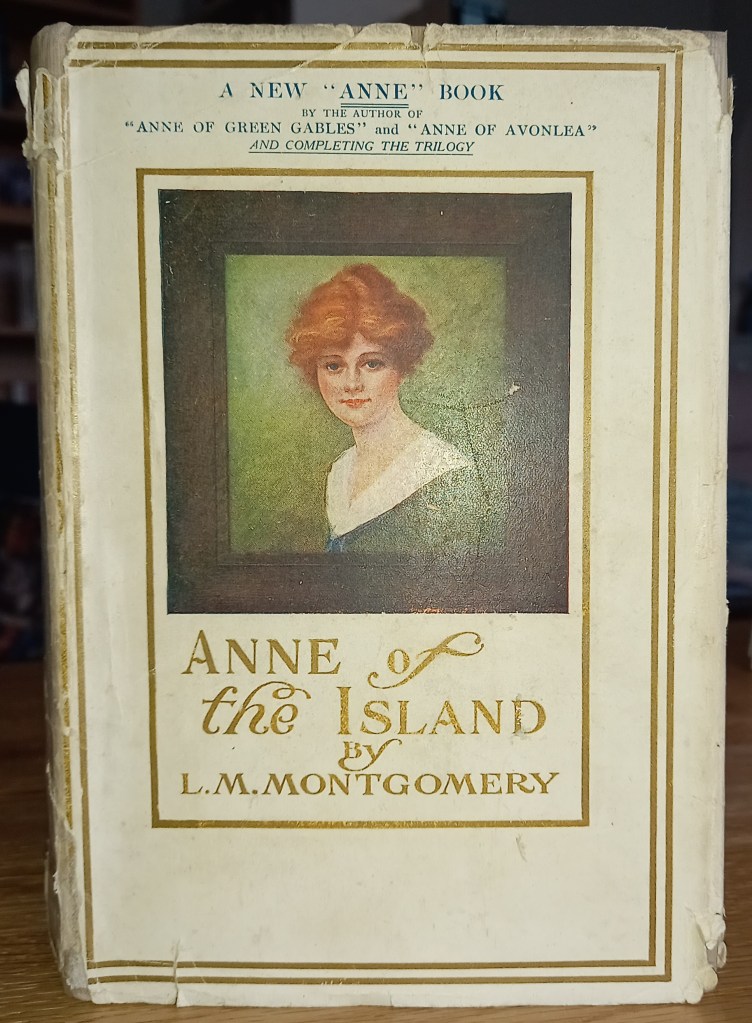
The knowledgeable amongst you will know that today is not only St Andrew’s Day. It is also the anniversary of the birth of Lucy Maud Montgomery. She was born in what was then called Clifton (now New London) on Prince Edward Island on this day in 1874 and came of good Scottish stock! As anyone who is reading this blog will know, she was the creator of Anne Shirley, the red-haired orphan adopted by Matthew and Marilla Cuthbert. Anne was her first creation but Maud herself identified more with Emily Starr about whom she wrote a trilogy. Thanks to the LM Montgomery Readathon set up by Andrea McKenzie and Benjamin Lefebvre I’ve spent large parts of the last three years rediscovering Montgomery’s works, some for the first time since my childhood. I still don’t get on well with Emily but I have a whole new understanding of, and feeling for, Jane of Lantern Hill and The Blue Castle. Naturally Anne of the Island remains my favourite though!
 Pictures and Conversations
Leave a comment