 by
by 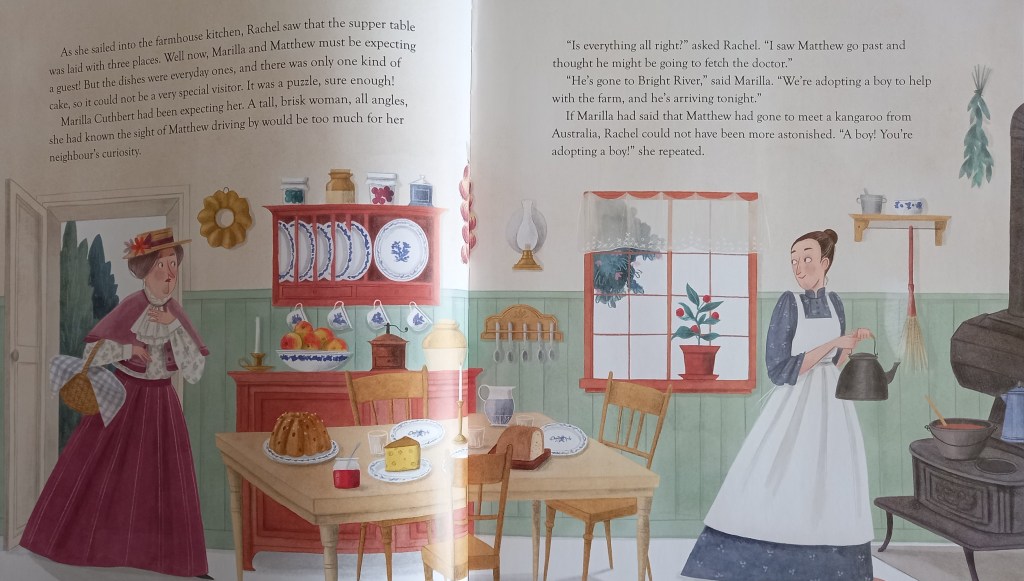
I’m not a great enthusiast for adaptations and retellings of novels. It seems to me that if a book is so good that someone wants to rework it, then it’s worth readers waiting for until they are able to understand and enjoy it. Adapting and retelling invariably means simplifying not just the plot but also the author’s style. The latter particularly irritates me. I’d be interested to know what authors think about this. So, bearing all this in mind, here I am reviewing an adaptation of Anne of Green Gables by one of my favourite authors, LM Montgomery!
There’s no denying that I approached it with some trepidation. First of all there’s the cover by which, if we’re being honest, we frequently judge a book. As a piece of art, I quite like it. I love the colour palette and the design with the central turquoise strip down the spine. And the way that the front and back covers show the same scene from different perspectives is a lovely touch. But the addition of woodland creatures makes the dancing Anne feel twee to me.
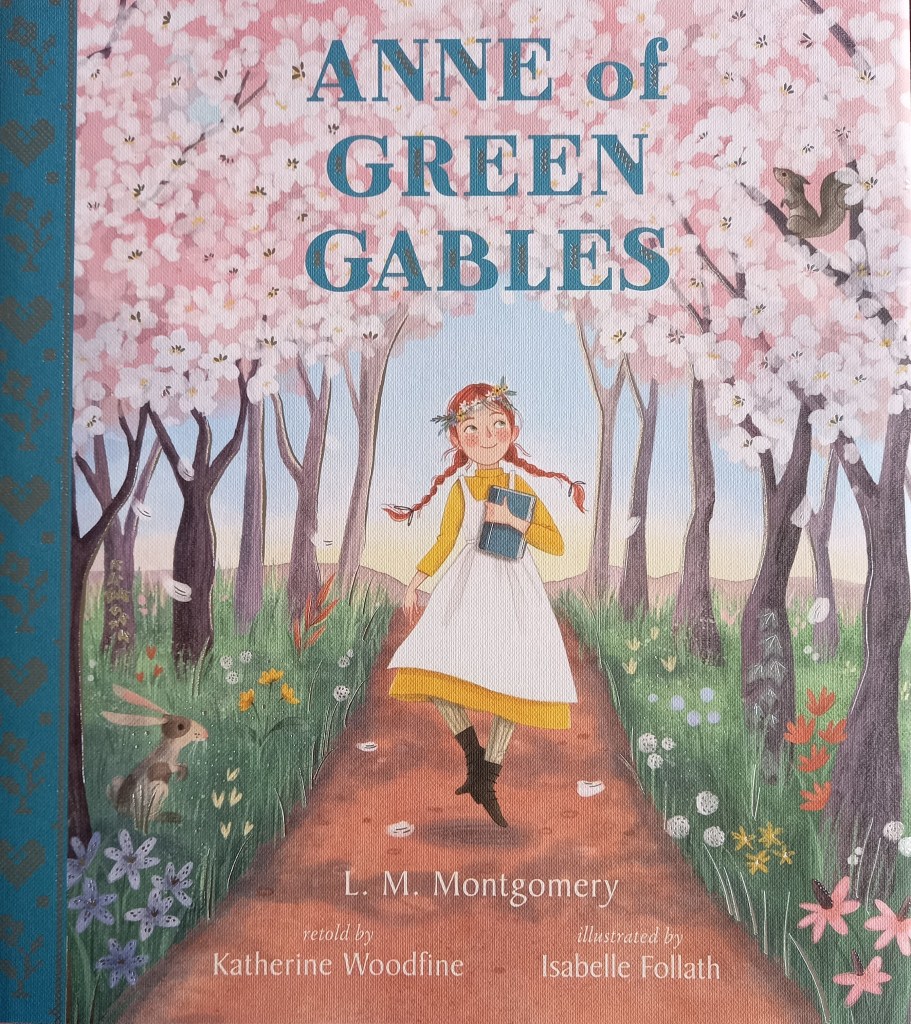
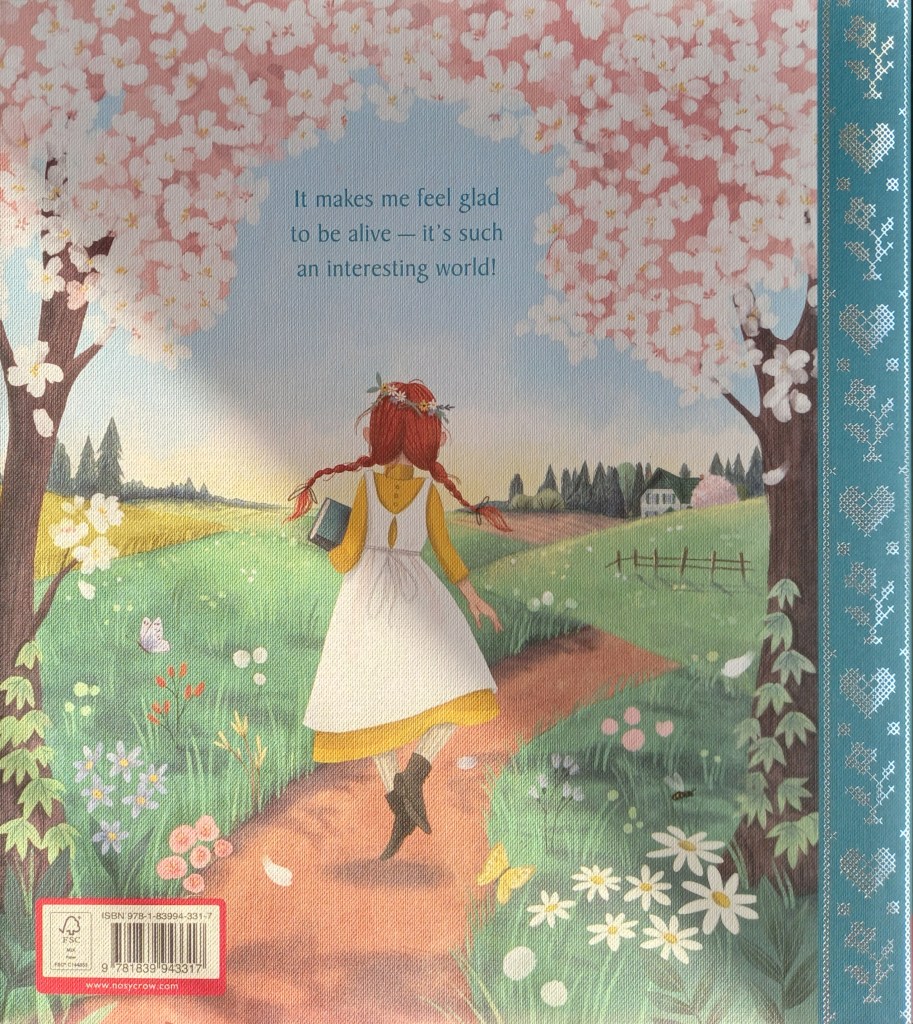
And that’s a huge issue for me. I’ve spent much of my life in books promoting and defending the Anne sequence. There is a feeling that the books have a rose-coloured tinge to them, and an idea lingers that Anne is fey and otherworldly. Those of us who know the books are aware that this is not true. Anne is a child with a troubled background who has retreated into her imagination in an effort to cope with all that has befallen her. Yes, this world of the imagination spills out in her speech and can make her seem precocious, but she knows what the real world is like and has learnt to survive it.

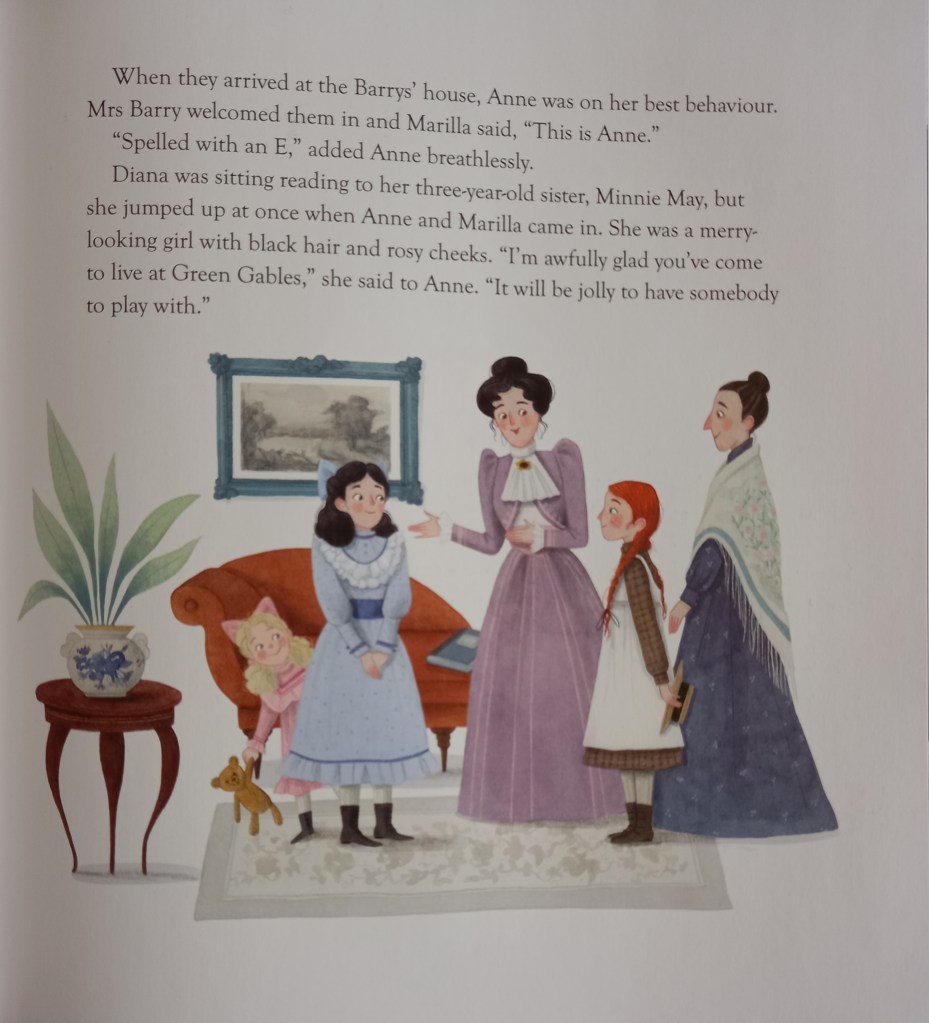
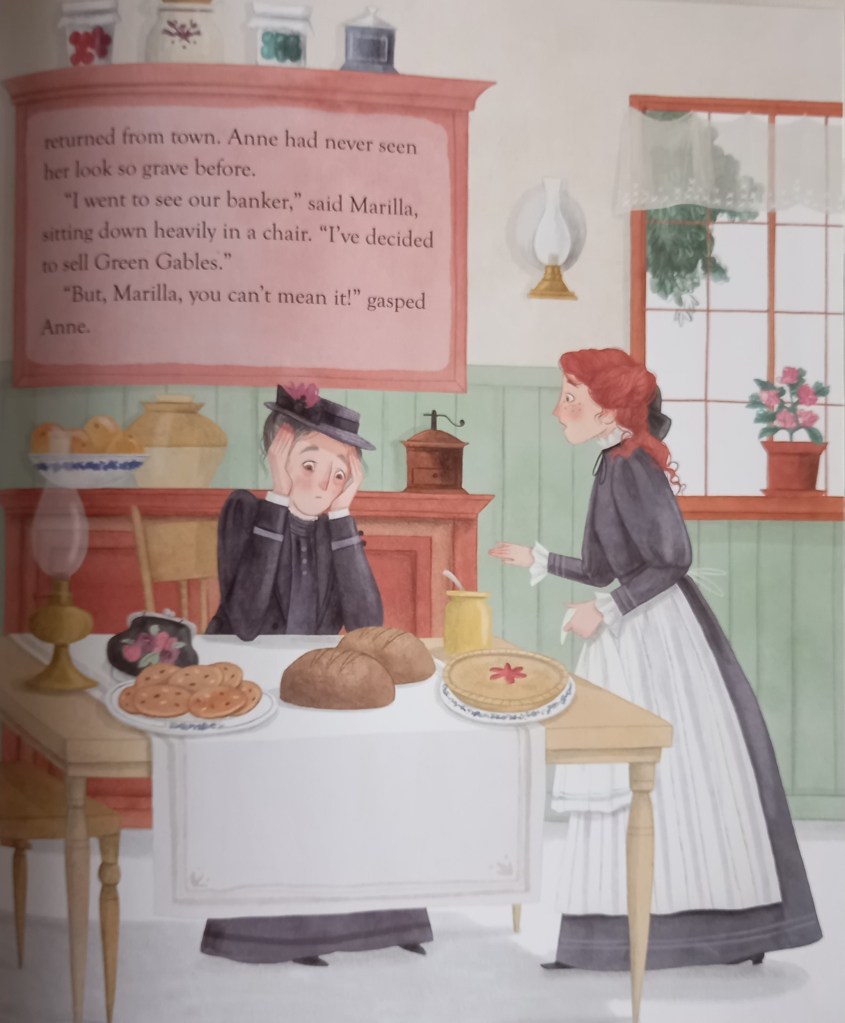
So much for the cover. Inside, I was charmed. Here I think Isabelle Follath has got it just right. Mrs Rachel Lynde and Marilla Cuthbert leap off the page as though the artist had plucked them from my imagination; and the Anne who meets Matthew at Bright River Station feels completely human and of the real world. Diana and Mrs Barry, Mr Phillips and the Avonlea schoolroom all fit in beautifully to their drawn world. And Gilbert Blythe is just perfect. The backdrops are evocative bringing to life the setting in time and place.

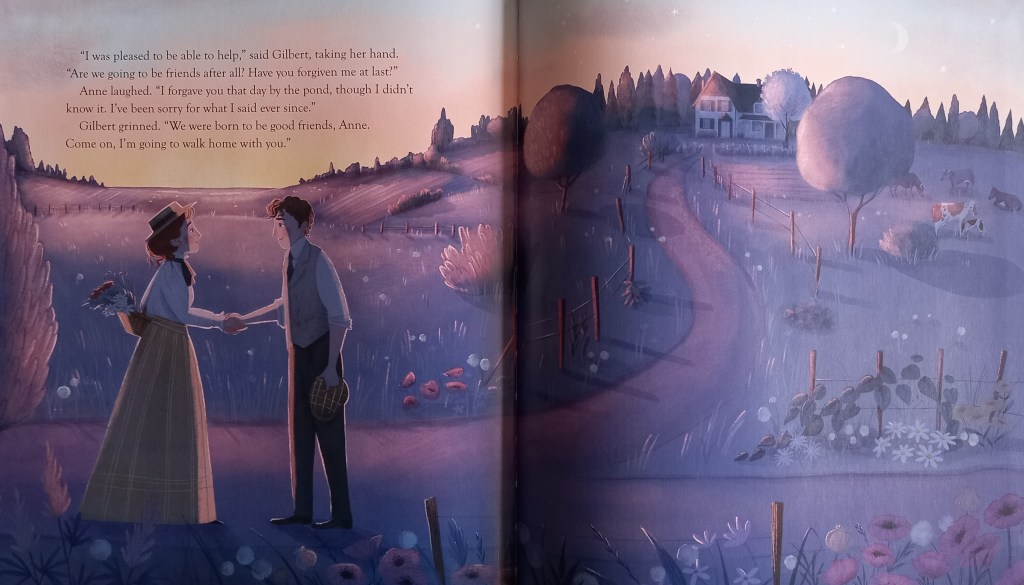
And the famous scenes from the book are dynamic and full of expression: Anne apologising – profusely – to Mrs Lynde, clinging to the bridge in the guise of Elaine the lily maid, being rendered speechless by Matthew’s gift of a dress with puffed sleeves. And, most famously of all, cracking her slate over Gilbert Blythe’s head. And there’s Matthew and Marilla in the barn at Green Gables, Diana drunk on homemade currant wine and Anne finally forgiving Gilbert on a mellow summer evening.

I love the way the characters age too. Anne matures from an excitable eleven-year-old to a calmer, more thoughtful college student and teacher-in-waiting, Matthew and Marilla age gently until the latter’s weariness presages his death and his sister gives in to emotion for one of the few times in her life.
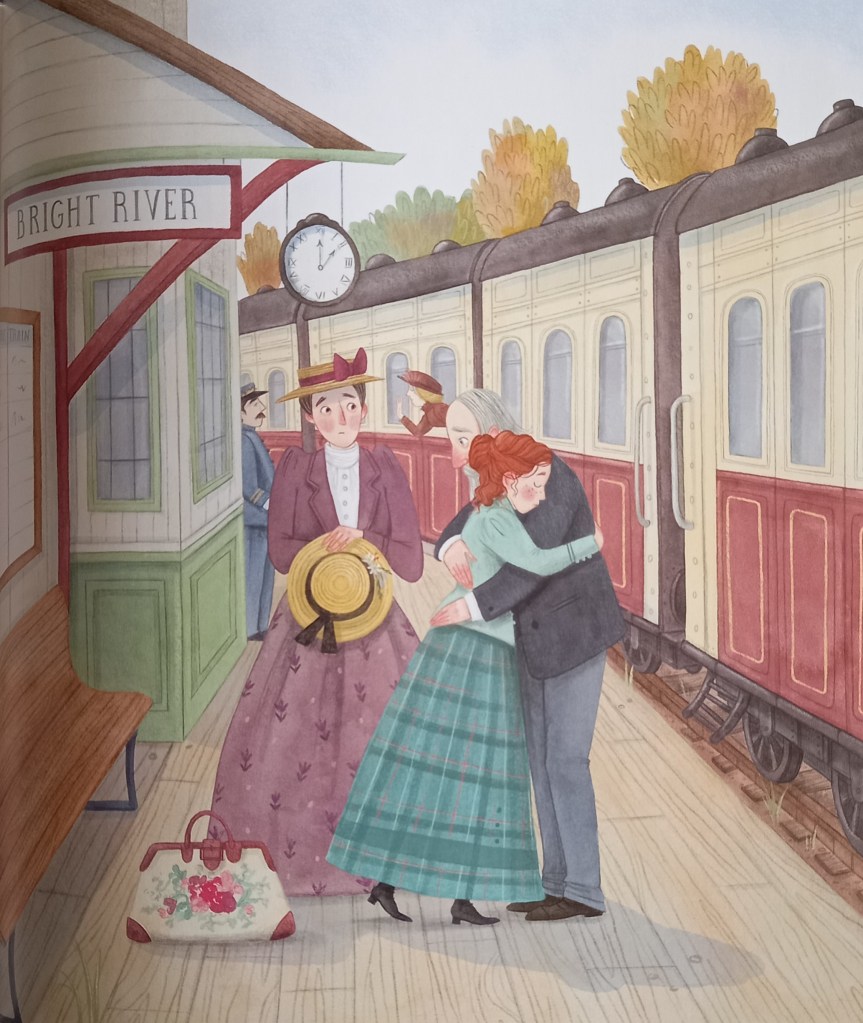
But Anne of Green Gables is about words. Anne’s vocabulary as her imagination and daydreams enter the public domain is one of the book’s important facets. Her language is what sets Anne apart from her classmates. How on earth could Katherine Woodfine retell and simplify the story without losing their power? In a word, she does it brilliantly.

The text has been cut but what is retained is true to Maud Montgomery’s original. In fact a lot of the text has been lifted directly from the 1908 book and these elements are sewn together expertly to give a whole piece of writing that flows smoothly and without hesitation.
Today, 30 November 2024, is the 150th anniversary of Lucy Maud Montgomery’s birth. Nosy Crow has given her – and us – a present to savour. The time-defying story of the world’s most famous red-haired orphan has been given to a new audience beautifully packaged but full of substance. I’m keeping my copy to add to my Montgomery collection, an easy decision to make.
 Pictures and Conversations
Leave a comment