 by
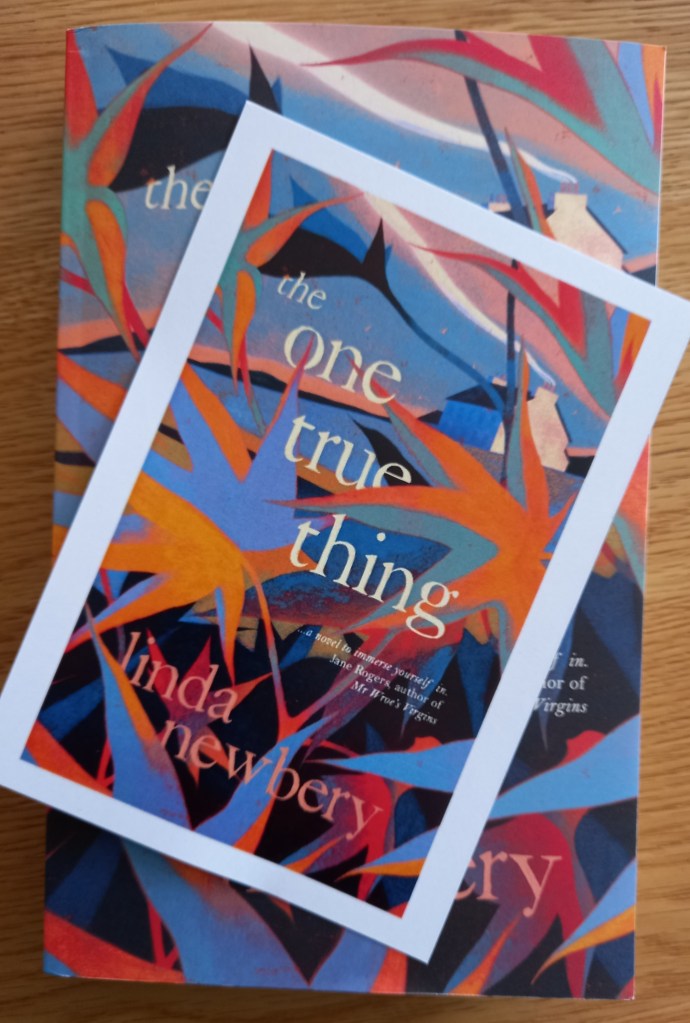
by If we are fortunate in our lives we will find the one thing that gives us meaning and contentment and joy. It might be something great or small and it will be personal to us even if it is something others also do. This is the thread running through Linda Newbery’s latest novel, appropriately titled The One True Thing.
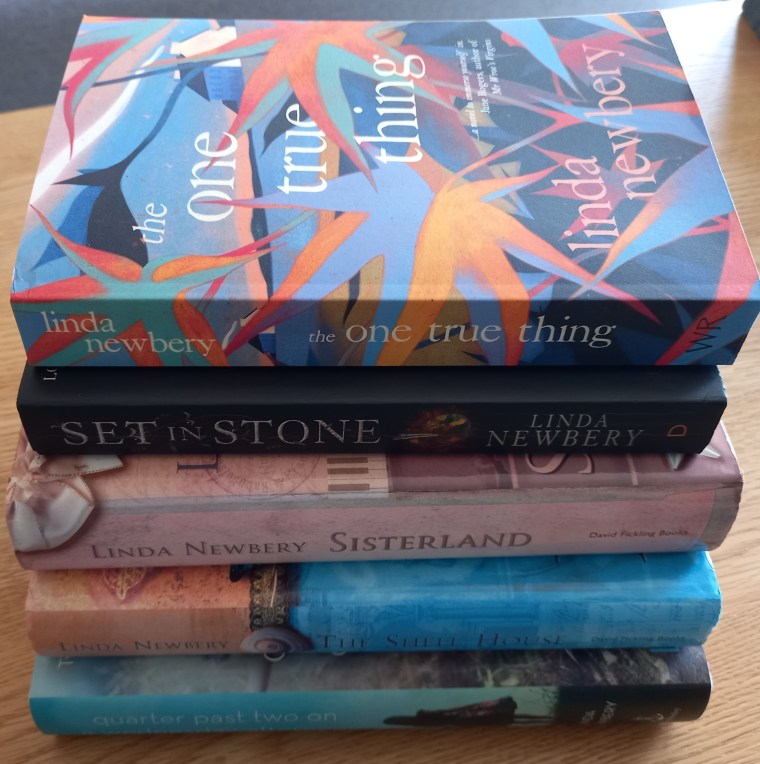
Linda Newbery is a writer of great experience and skill. Perhaps most well-known for her award-winning novels for young adults such as The Shell House, Sisterland and Set in Stone, she is not new to the adult market. And while The One True Thing and Finding Rose (Quarter Past Two on a Wednesday Afternoon) might be more complex than her young adult books, they all show the same understanding of people and the power of words woven together to make pictures in the mind.
As with so many of Linda’s novels, the main character here is not a person but a place. Wildings. A house passed down through the Harper family, making its way in the 1980s to Anthony along with his wife and daughter, Bridget and Suzanne. Whilst the latter is enthusiastic about this new life, it takes Bridget time to find her place in it. Family life is not easy for the Harpers. Anthony is prone to depression, something he refuses to accept. Bridget takes refuge in the garden which she re-establishes and develops and where she finds her one true thing.
Suzanne, traumatised by her parents’ incomprehensible relationship, marries early and finds strength and contentment with her kind and dependable husband Ed. Into the mix are thrown the tenants of studios developed from the old stables. Some, like Meg, are constant; others, such as Adam, come and go. But they have their parts to play. Not unusually for Linda’s books the timeline moves to and fro through the late twentieth and early twenty-first centuries. However, it is Jane, the late-in-life daughter, who seems to me to be the significant voice. The contemporary story is seen through her eyes as she struggles to come to terms with the loss of both her parents whilst she is in her twenties and unsure of what her purpose and place in life might be.
There is much of Linda in this novel. Not in any one character but scattered across the cast. Yoga, gardening, climate change activism, stone-carving – and a cat – are all things that are significant in her life. Perhaps she would say that one of these is more important than the other. For my part, though, and as an outsider, I would say that it is in writing that Linda has found her one true thing.
 Pictures and Conversations
can’t wait to read this book, even more now.